The Court of Bosnia and Herzegovina has acknowledged that no progress has been made since 2023 in locating Sakib Mahmuljin, a former commander of the Third Corps of the Army of Bosnia and Herzegovina, who was convicted of war crimes. Mahmuljin was sentenced to eight years in prison for crimes committed against Serbs in the Ozren and Vozuća areas. However, he left Bosnia and Herzegovina before beginning his sentence, reportedly for medical treatment in Turkey. Despite the issuance of an international arrest warrant in November 2022, Turkish authorities have stated that Mahmuljin has not been located within their territory.
The court’s admission highlights a significant gap in the enforcement of war crimes sentences in Bosnia and Herzegovina. The last recorded action by the court was the submission of extradition documentation to Turkish authorities via Bosnia’s Ministry of Justice on January 17, 2023. This was followed by a communication from Turkey’s Ministry of Foreign Affairs on September 14, 2023, confirming that Mahmuljin had not been found in Turkey. The court had initially issued the international arrest warrant after Mahmuljin failed to report for his prison term, citing his alleged medical needs as the reason for his departure to Turkey.

This situation has drawn criticism from various quarters, including Milovan Gagić, President of the Veterans Organization of Republika Srpska (BORS), who expressed disappointment over the lack of action to ensure Mahmuljin serves his sentence. Gagić remarked that it is disheartening for a convicted war criminal to live freely abroad while Bosnian authorities appear inactive in pursuing his return to serve his sentence.
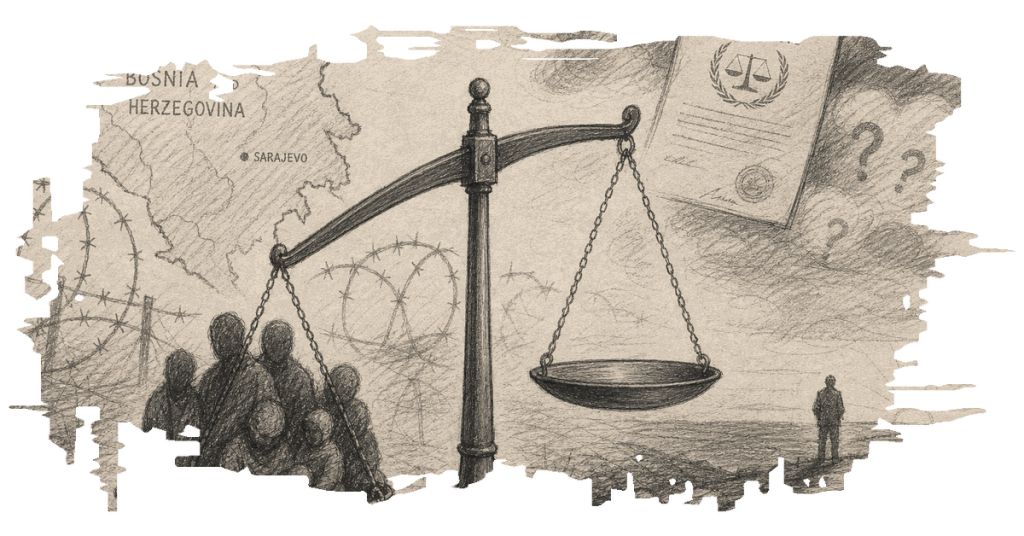
Mahmuljin’s case underscores broader challenges in the region concerning the prosecution and enforcement of sentences for war crimes committed during the Bosnian War. The difficulties in securing Mahmuljin’s extradition and the apparent halt in efforts to locate him raise questions about the effectiveness of international cooperation and the commitment of Bosnian authorities to uphold justice for war crimes.
The broader context of war crimes accountability in Bosnia and Herzegovina reveals systemic issues in achieving justice and reconciliation in the Balkans. The case of Sakib Mahmuljin is not isolated, as many war crimes cases from the Bosnian War remain unresolved, reflecting ongoing tensions and the complex political landscape in the region. The lack of progress in Mahmuljin’s case may impact the perception of justice and reconciliation efforts in Bosnia and Herzegovina and the wider Balkan region.