The Serbian Parliament has approved a significant rebalance of the 2026 budget, marking a pivotal moment in the country’s fiscal planning amidst ongoing economic challenges. The decision, made during an extraordinary session that concluded on September 1, saw 137 lawmakers voting in favor, while 36 opposed the changes. The budget rebalance increases total planned state revenues to 2.527 trillion dinars, representing an increase of 112.45 billion dinars over the original budget.
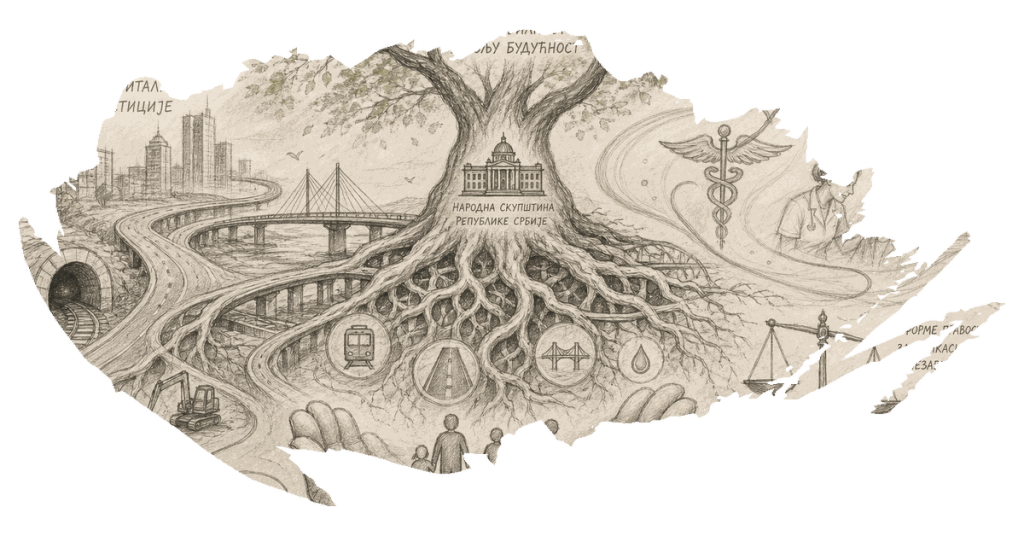
The revised budget allocates substantial funds across various sectors, with a notable focus on capital investments and healthcare. Specifically, 779.9 billion dinars have been earmarked for capital investments, which constitute 7% of the projected GDP. This allocation aims to support ongoing infrastructure projects such as the Moravian Corridor and the Danube Highway, as well as new initiatives like the “Vožd Karađorđe” road.

Healthcare also receives a significant boost, with an additional 28.3 billion dinars allocated to enhance medical services. This funding is intended to support treatments for rare diseases, the procurement of innovative medicines, and the continuation of major projects like the construction of the Tiršova 2 hospital.
In addition to these sector-specific allocations, the budget includes a 734.4 million euro package aimed at citizen assistance. This package is designed to bolster social protection and healthcare initiatives, reflecting the government’s commitment to supporting vulnerable populations. The funds will also address the needs of the Alimony Fund and the implementation of the Parent-Caregiver Law, with 60.7 million dinars allocated for the former and 591.5 million dinars for the latter.
Finance Minister Siniša Mali, who presented the budget rebalance to the assembly, emphasized the government’s focus on maintaining economic stability and improving living standards. The budget projects a 3.3% economic growth rate for 2026, with the GDP expected to reach 95.3 billion euros. Public debt is projected to be 43.8% at the central level and 44.2% at the general state level by the end of the year.
Despite the optimistic projections, the implications of the budget rebalance on public services and economic recovery remain uncertain. The allocation of funds for healthcare and social support is critical, yet there is a lack of consensus on the effectiveness of these measures. The government’s ability to manage public finances effectively will be crucial in realizing the intended benefits of the budget changes.
The session also saw the adoption of several judicial reforms, including the Law on the Judicial Academy, which aims to enhance the training and independence of judicial personnel. This move is part of a broader effort to improve the efficiency and impartiality of Serbia’s judicial system.
Overall, the budget rebalance reflects the Serbian government’s strategic priorities in addressing economic challenges and supporting public welfare. As the country navigates its economic landscape, the effectiveness of these fiscal measures will be closely monitored by both domestic stakeholders and the international community.