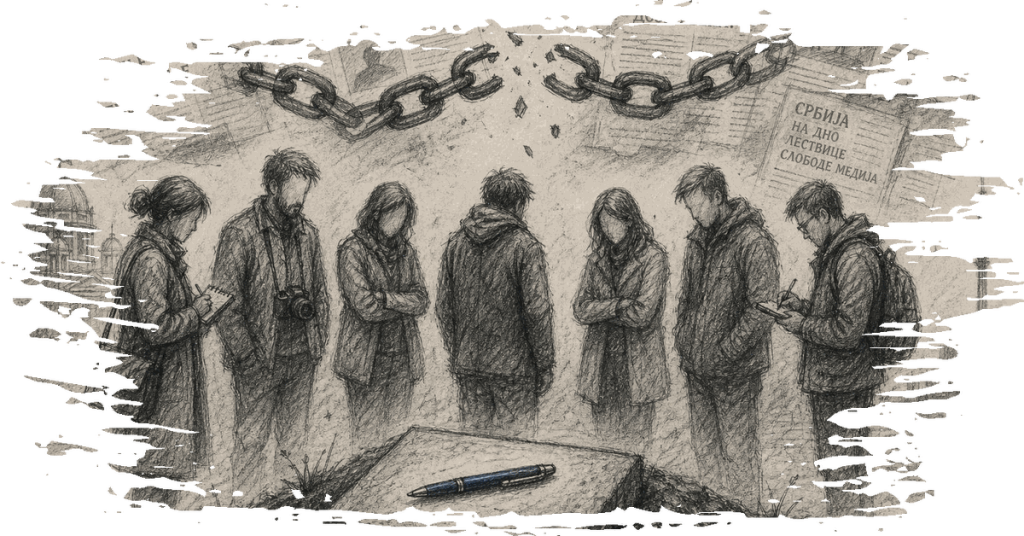
Miloš Živković, a journalist known by his nickname Beta, recently passed away after a prolonged illness, sparking a reflection on the state of journalism in Serbia. Živković, who was a correspondent for the news agency Beta from the town of Šabac, was a respected figure in the local journalism community. His funeral, however, was attended by only seven colleagues, highlighting what some see as a troubling lack of solidarity within the profession.
The sparse attendance at Živković’s funeral has been interpreted by some as indicative of broader issues facing journalists in Serbia. Criticism has been directed towards the perceived fragmentation and lack of support among journalists, with some suggesting that the profession has become increasingly unsupportive over the years. This sentiment was echoed by a commentator who lamented the decline in professional camaraderie, noting that such a lack of solidarity is emblematic of the challenges facing Serbian journalism today.

Over the past 15 years, journalists in Serbia have grappled with issues of job security and professional integrity. The media landscape has been described as challenging, with pressures that may discourage journalists from supporting one another. The situation has reportedly been exacerbated by political influences, with some journalists feeling marginalized or labeled as foreign agents or traitors.
The case of Živković underscores the complexities within the media sector, where professional and ethical dilemmas are compounded by external pressures. The lack of attendance at his funeral is seen by some as a reflection of these systemic issues, suggesting a need for introspection and change within the profession.
The discussion around Živković’s passing also touches on the broader societal context in Serbia, where the value of life and death is perceived differently depending on one’s status. The commentary draws a stark contrast between the quiet departure of journalists like Živković and the public commemorations planned for controversial figures, such as war criminals, who receive state honors despite their past actions.
This juxtaposition raises questions about societal values and the recognition of contributions made by journalists. It also highlights the ongoing struggle for media professionals in Serbia to maintain their integrity and solidarity in a challenging environment. The situation calls for a renewed focus on supporting journalists and fostering a more cohesive professional community.