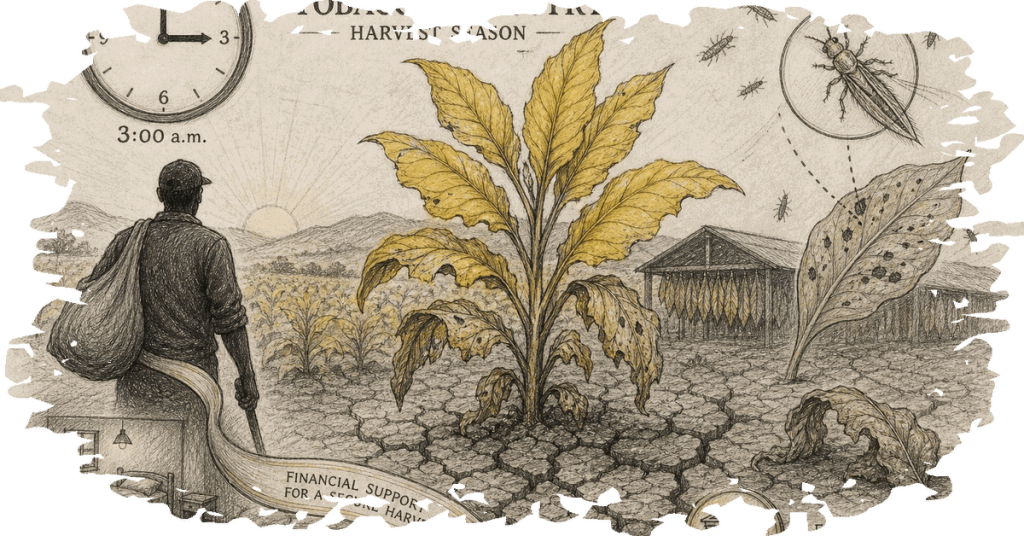
Seasonal workers in Serbia’s tobacco industry are earning significant wages amid challenging agricultural conditions this year. In the village of Hrtkovci, the tobacco harvest has commenced on approximately 600 hectares, with workers earning 630 Serbian dinars (RSD) per hour, amounting to over 3,000 RSD for five hours of labor. This is part of an effort to manage the harvest of Virginia tobacco, which has been complicated by severe drought and pest infestations.
The tobacco producers in the region are facing a particularly tough season. They anticipate an average yield of about 2.5 tons per hectare. However, the weather conditions, characterized by high temperatures and a lack of rainfall, along with an infestation of thrips insects, have posed significant threats to the crop quality. These insects damage the tobacco leaves by sucking out their juices, leading to a reduction in quality and economic value. Živko Rajaković, a seasoned tobacco producer, noted that despite multiple attempts to combat the pest with up to five treatments this year, full success was not achieved.

Despite these difficulties, the tobacco industry in Serbia remains stable, thanks in part to the financial backing of Japan Tobacco International (JTI). The company supports local farmers by financing the entire production process, offering stability and security through long-term contracts. This arrangement includes advances for the wages of seasonal workers, which are crucial for the labor-intensive tobacco harvesting process.
Rajaković’s farm, like others in the area, relies heavily on these seasonal workers, who come from surrounding regions such as Kostolac. The workers are provided with free accommodation, equipped with necessary amenities, although they are responsible for their own meals. The workday starts early, with workers beginning their tasks at 3 a.m. and continuing until about 8 a.m., after which the harvested tobacco is processed and dried.
The economic implications of this seasonal labor are significant, as it provides a source of income for many workers while supporting the local agricultural economy. However, the challenges posed by the current environmental conditions highlight the vulnerabilities faced by the tobacco industry. The ongoing drought and pest issues could potentially impact the overall yield and quality of the tobacco, which may have further economic repercussions.
While the tobacco grown in Serbia is noted for its quality, characterized by lemon-yellow leaves and a clean, elastic leaf mass, the current season’s adversities underscore the need for resilience and adaptability among producers. Rajaković emphasizes the importance of having one’s own land and remaining steadfast in the face of challenges, as the quality of Serbian tobacco remains a valued asset in the market.
Overall, the situation in Serbia’s tobacco fields this season reflects broader agricultural challenges, with climate conditions and pest management playing critical roles in determining the success of the harvest. The support from JTI provides a buffer against some of these challenges, ensuring that the industry can continue to operate despite the difficulties. However, the long-term sustainability of tobacco farming in the region may require further adaptation and innovation to cope with environmental changes.