

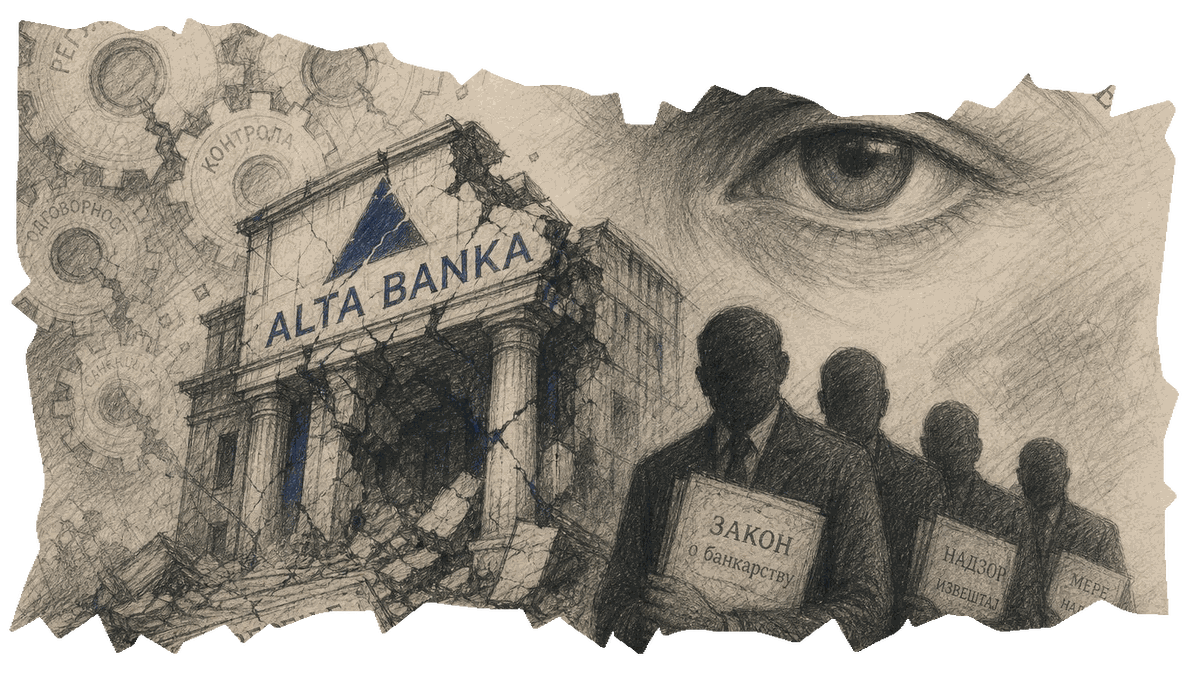
Dejan Šoškić, former governor of the National Bank of Serbia, has criticized the central bank for its failure to prevent the collapse of Alta Bank, asserting that the institution had the necessary legal mechanisms to intervene but did not use them effectively. Speaking on the RTS program “Oko,” Šoškić warned that the financial fallout from the bank’s failure would ultimately be borne by Serbian citizens through increased banking service costs.
Šoškić highlighted that the problems with Alta Bank began when a new owner was allowed to enter the banking sector without meeting the legal criteria required for such ownership. “All of us, as citizens, will pay the price for the corruption that occurred at Alta Bank, where the bank was granted a license it should not have received,” Šoškić stated. He emphasized that the acquisition by the new owner, who he claims did not fulfill the necessary credibility, expertise, and capital capability criteria, was a significant oversight.
According to Šoškić, the National Bank of Serbia (NBS) had the authority to impose stricter oversight measures, such as continuous business monitoring and ensuring the presence of its representatives at board meetings. He criticized the NBS for not reacting to the fact that Alta Bank reported more than 20% of its assets in cash, a situation he deemed unacceptable and requiring immediate investigation.
The former governor also pointed out that the NBS could have enforced more independent internal audits and risk management practices within the bank. He suggested that the director of the bank supervision sector and the top management of the NBS should be the focus of an investigation into the bank’s collapse. Furthermore, Šoškić criticized legislative changes made in 2018, which he believes weakened the oversight capabilities of the NBS by dissolving the Directorate for Supervision of Financial Institutions.
In contrast to the situation at Alta Bank, Šoškić reassured the public about the stability of Poštanska Štedionica, a state-owned bank, emphasizing that it is currently liquid and there is no cause for panic. He criticized the Serbian government for not adequately communicating with the public to alleviate concerns regarding Poštanska Štedionica.
The collapse of Alta Bank, which had its operating license revoked by the NBS on October 31, 2026, due to financial instability, has raised broader concerns about the stability of the Serbian banking sector. While the NBS has assured that the sector remains stable and well-capitalized, Šoškić’s comments underscore ongoing scrutiny of the regulatory body’s role in the bank’s downfall. The situation has led to increased public anxiety, with some citizens withdrawing their savings from banks as a precautionary measure.
Šoškić’s remarks add a critical perspective to the ongoing discourse about the regulatory environment in Serbia’s banking sector and the potential repercussions for consumers. His call for a comprehensive investigation into the Alta Bank case highlights the need for accountability and improved regulatory oversight to prevent similar incidents in the future.



0 Comments