

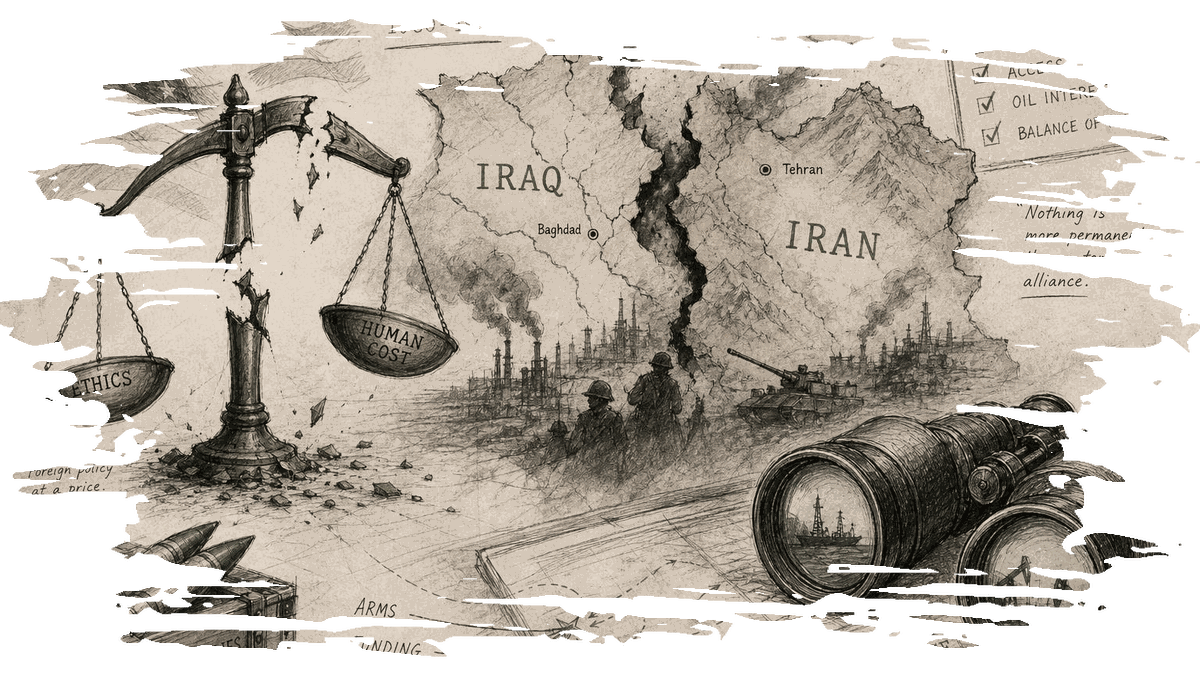
Former CIA analyst Ray McGovern has made a striking claim that the United States provided Iraq with the precursor chemicals necessary for chemical weapons during the Iran-Iraq War in the 1980s. This revelation, shared during an interview on the program Dialogue Works, challenges the prevailing narratives about the U.S.’s role in the conflict and its current stance on Iran’s chemical weapons capabilities.
McGovern stated that the American public is largely unaware of the U.S.’s involvement in supporting Iraq’s chemical weapons program. He emphasized that declassified CIA documents confirm that the U.S. supplied Iraq with intelligence that facilitated chemical attacks against Iran. These documents, reported by Foreign Policy in 2013, reveal that in 1988, the U.S. provided Iraq with satellite imagery of Iranian troop positions, fully aware that Saddam Hussein might use chemical weapons in response. The CIA estimated that the casualties from these attacks ranged from hundreds to thousands.
The Iran-Iraq War, which lasted from 1980 to 1988, saw Iraq deploying chemical weapons against Iranian forces. Historically, narratives have often depicted Iran as the primary aggressor concerning chemical weapons. McGovern’s claims, however, suggest a need to reassess the historical narrative and consider the implications of U.S. actions during that period.
During the interview, McGovern expressed skepticism about recent reports suggesting that Iran is preparing chemical weapons or dirty bombs for use against its adversaries. He noted that many of Iran’s current top officials fought in the Iran-Iraq War and are acutely aware of the devastation caused by chemical weapons. He pointed out that Ayatollah Khomeini had declared weapons of mass destruction as contrary to Islamic principles, casting doubt on the credibility of claims about Iran’s current chemical weapons capabilities.
McGovern also questioned the sources of these recent reports, suggesting that they might originate from Israeli intelligence, which he described as a frequent source of propaganda against Iran. This assertion aligns with previous instances where Israeli intelligence has been implicated in shaping narratives about Iran’s military capabilities.
The implications of McGovern’s claims are significant, particularly in the context of U.S.-Iran relations and historical accountability. If the U.S. indeed played a role in arming Iraq with chemical weapons, it raises questions about the ethical and strategic decisions made during the Iran-Iraq War and how these decisions are perceived in the current geopolitical climate.
McGovern’s statements also touch on broader themes of media accountability and the dissemination of information. He criticized the media’s role in selling the Iraq War and lamented the lack of accountability for the dissemination of unverified or misleading information. He cited the example of Fred Hiatt, the late editorial page editor of the Washington Post, who admitted that the publication’s prewar op-eds may have been misleading about Iraq’s weapons capabilities.
While McGovern’s claims are based on declassified documents and his personal experiences, they remain a single source of information. The lack of corroboration from other independent sources highlights the need for careful scrutiny and further investigation into the historical narratives of U.S. foreign policy in the Middle East.
Overall, McGovern’s revelations prompt a reevaluation of the U.S.’s historical role in the Iran-Iraq War and its current posture towards Iran. As the geopolitical landscape continues to evolve, understanding the past actions and decisions that have shaped current relations is crucial for informed policy-making and international diplomacy.

0 Comments