

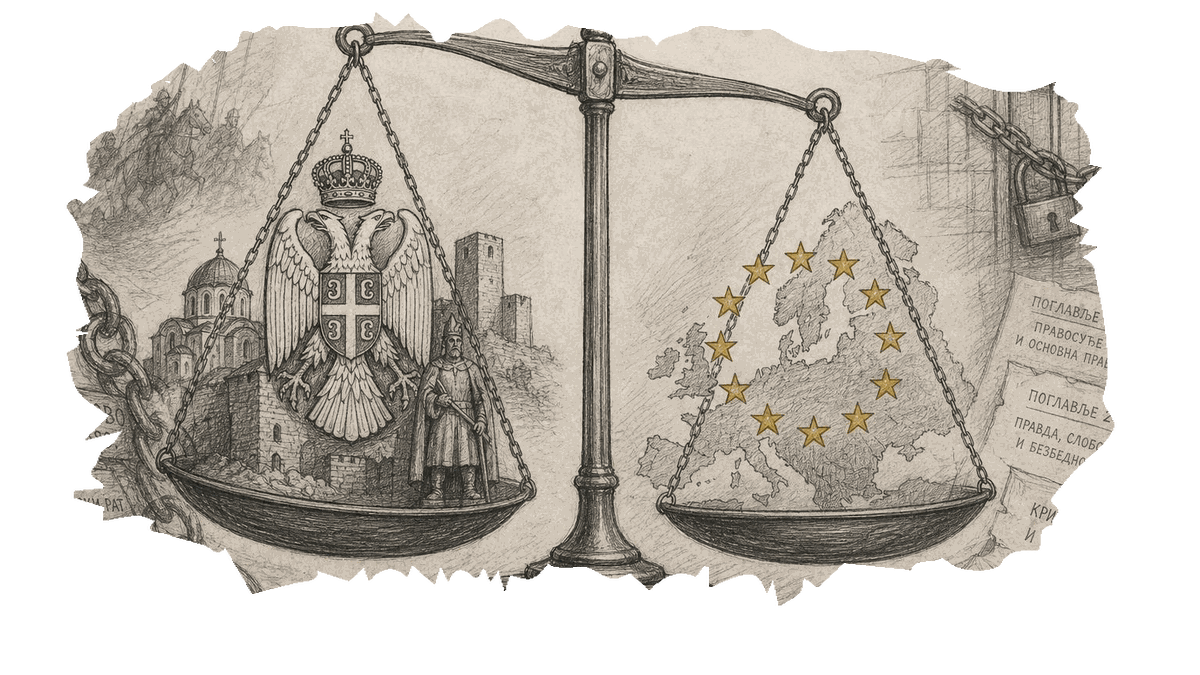
The newly elected Serbian government, led by the Students’ List, is facing immediate international pressure as it navigates its path toward European Union membership. European Commissioner for Enlargement Marta Kos has made it clear that Serbia’s progress in EU accession talks is contingent upon the country aligning its foreign policy with EU interests, particularly by implementing sanctions against Russia. Kos emphasized that Serbia’s advancement towards EU membership would be “very, very difficult” without such alignment, especially in the context of the ongoing conflict in Ukraine.
This ultimatum from Brussels is part of a broader set of demands from neighboring countries Slovenia and Croatia, who have outlined specific historical grievances they expect the new Serbian government to address. Slovenian Prime Minister Janez Janša has underscored that the extradition of UDBA archives will be a fundamental requirement in Serbia’s EU accession negotiations. He has stated that Slovenia will not consent to any progress in Serbia’s EU talks unless these archives, which pertain to Slovenia, are handed over.
Similarly, Croatian officials have expressed their expectations from the new government in Belgrade, focusing on unresolved issues from the 1990s conflicts. Croatian Deputy Prime Minister and Minister of Veterans Tomo Medved has called for access to archival materials previously under the jurisdiction of the State Security Service, now reportedly held by Serbian intelligence agencies. This demand is part of a broader expectation for Serbia to address war-related issues, including the fate of missing persons and the prosecution of war crimes.
These demands come in the wake of the Students’ List’s electoral victory on October 25, 2026, which ended the long-standing rule of the Serbian Progressive Party. The new government is now under scrutiny to see how it will respond to these international pressures while balancing national interests and aspirations for EU integration.
The situation highlights the complex geopolitical landscape Serbia finds itself in, as it seeks to navigate between maintaining traditional alliances and meeting the expectations of its European neighbors. The demands from the EU and regional countries reflect longstanding issues that have historically complicated Serbia’s EU accession process. Previous Serbian governments have faced criticism for their handling of these matters, and the new administration’s approach will be closely watched both domestically and internationally.
The Students’ List, which has yet to formally constitute its government, now faces the challenge of addressing these demands while maintaining its electoral promises. The pressure from Brussels, Ljubljana, and Zagreb underscores the delicate balancing act that Serbia must perform as it seeks to advance its EU membership ambitions. The outcome of these negotiations will likely have significant implications for Serbia’s foreign policy and its relations with both the EU and neighboring countries.

0 Comments