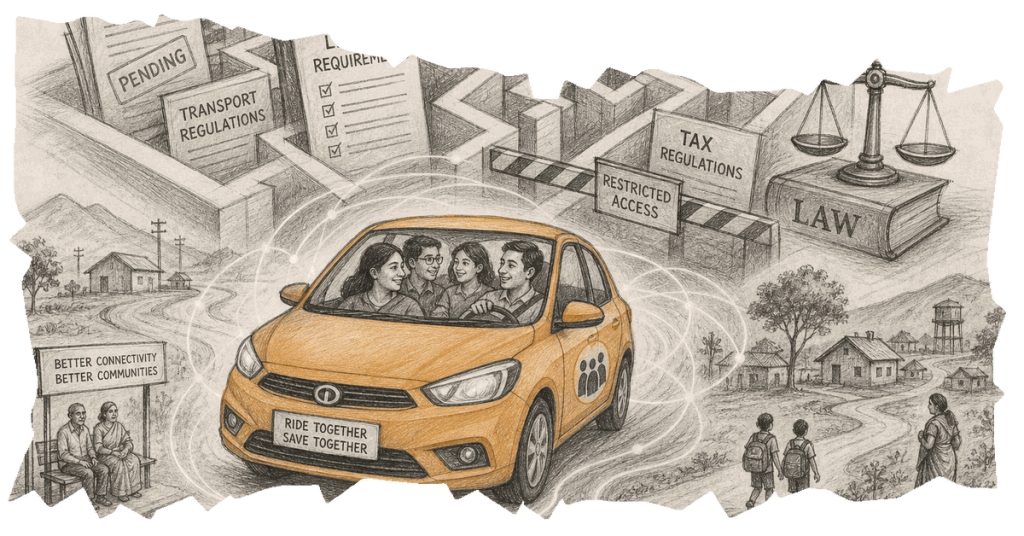
BlaBlaCar, the popular ride-sharing platform, is currently navigating regulatory challenges in Serbia as drivers using the service have faced fines for sharing travel costs. The company reports that some drivers have been fined up to 150,000 dinars, a consequence of Serbian regulations that do not legally recognize shared transport. This has led to potential penalties for drivers who are perceived to be operating outside the bounds of legal passenger transport.
BlaBlaCar emphasizes that its model is non-commercial, designed to facilitate cost-sharing rather than profit-making. The platform operates on the principle that drivers plan their journeys for personal reasons and choose to share the ride with passengers to split costs like fuel and tolls. According to BlaBlaCar, the destination and timing of the trip are determined by the driver, not by passengers seeking transport. To reinforce this non-commercial stance, the company imposes mandatory price limits based on mileage to ensure that drivers only cover a portion of actual travel costs without making a profit.

The issue arises from the fact that Serbian transport laws currently do not differentiate between traditional commercial transport services and non-commercial ride-sharing models like BlaBlaCar. This legal ambiguity has resulted in fines for drivers who, despite sharing costs, are treated under the same regulations as commercial transport operators. BlaBlaCar has expressed its commitment to helping Serbian authorities understand the nature of carpooling and is advocating for legal recognition and protection of this model.
In response to the fines, BlaBlaCar is offering support to users who encounter inspections and advises them to comply with both platform rules and local transport regulations. The company encourages drivers to remain calm during inspections and to demonstrate that their activities are purely cost-sharing. BlaBlaCar also urges drivers to contact customer support for assistance if they encounter issues with authorities.
The company is actively working to engage with Serbian regulatory bodies to clarify the legal status of ride-sharing. BlaBlaCar highlights that in many of the 41 countries where it operates, carpooling is officially recognized within laws governing transport, mobility, and environmental protection. The company argues that ride-sharing complements public transport, particularly in rural areas where public transport options are limited or non-existent.
The rise in fuel prices has further increased interest in ride-sharing as a cost-effective transport solution. BlaBlaCar reports a 41% increase in the number of offered seats in Serbia as of March 2026, along with a 30% rise in new drivers compared to the previous year. The platform connects users across more than 2,000 locations in Serbia, including cities, towns, and rural areas.
The ongoing regulatory challenges highlight a significant issue for the sharing economy in Serbia, as the lack of legal clarity could deter participation and growth in ride-sharing. BlaBlaCar remains committed to working with authorities to ensure that its non-commercial model is legally recognized and protected, which could pave the way for clearer regulations and a more supportive environment for shared transport in the future.