

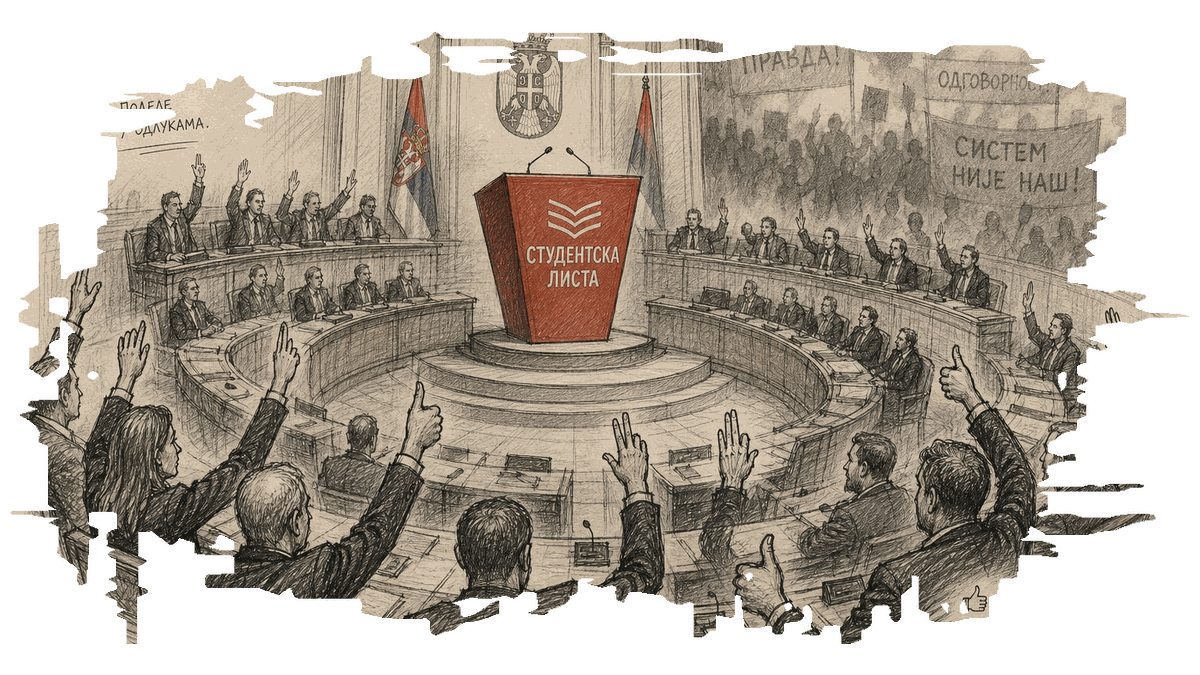
The Serbian National Assembly has completed the formation of its 15th session, marking a significant milestone in the establishment of the new government’s structure. This development was finalized during the constitutive session, which concluded with the unanimous approval of permanent delegations to international institutions. The session, which began on November 17, 2026, saw 136 out of 138 present deputies voting in favor of the decisions, with no opposition and two abstentions. The formation of these delegations is a crucial step in solidifying the operational framework of the new assembly.
The session was presided over by Aleksandar Čupić, who was elected as the President of the Assembly on the proposal of the Students’ List, a political group that emerged victorious in the October 25, 2026, elections. The Students’ List has since demonstrated significant control over the parliament, with all six vice-presidential positions also filled by its members. This control was evident in the assembly’s recent decisions, which were made with substantial majority support.
The establishment of permanent delegations is essential for Serbia’s participation in international parliamentary institutions. These delegations will include members from both the ruling Students’ List and the opposition group “Srbija pobeđuje,” despite the latter’s earlier decision to leave the session in protest. The opposition’s departure was in response to their dissatisfaction with the current leadership structure and the lack of representation in key roles.
Aleksandar Čupić addressed the assembly, emphasizing the importance of maintaining dignity and respect within the parliamentary proceedings. He called for restraint from violence, both verbal and physical, urging all citizens to suppress any malevolent intentions. This appeal came in response to concerns raised by Aleksandar Vučić, leader of the “Srbija pobeđuje” group, who highlighted issues of violence and intimidation affecting businesses in Serbia.
The absence of opposition participation during the voting process raises questions about the inclusivity of the new assembly’s decisions. The opposition has expressed dissatisfaction with the concentration of power within the Students’ List, which could potentially escalate political tensions. The assembly’s actions reflect a significant shift from the previous dominance of the Serbian Progressive Party, which held power for over a decade before the recent elections.
The newly formed delegations are expected to play a pivotal role in shaping Serbia’s international relations and parliamentary diplomacy. The decisions made during this session are indicative of the Students’ List’s approach to governance, focusing on establishing a robust operational framework for the new government. However, the political climate remains tense, with the opposition’s concerns about representation and democratic norms still unresolved. As Serbia navigates this transitional period, the effectiveness and inclusivity of the new government’s strategies will be closely scrutinized both domestically and internationally.



0 Comments