

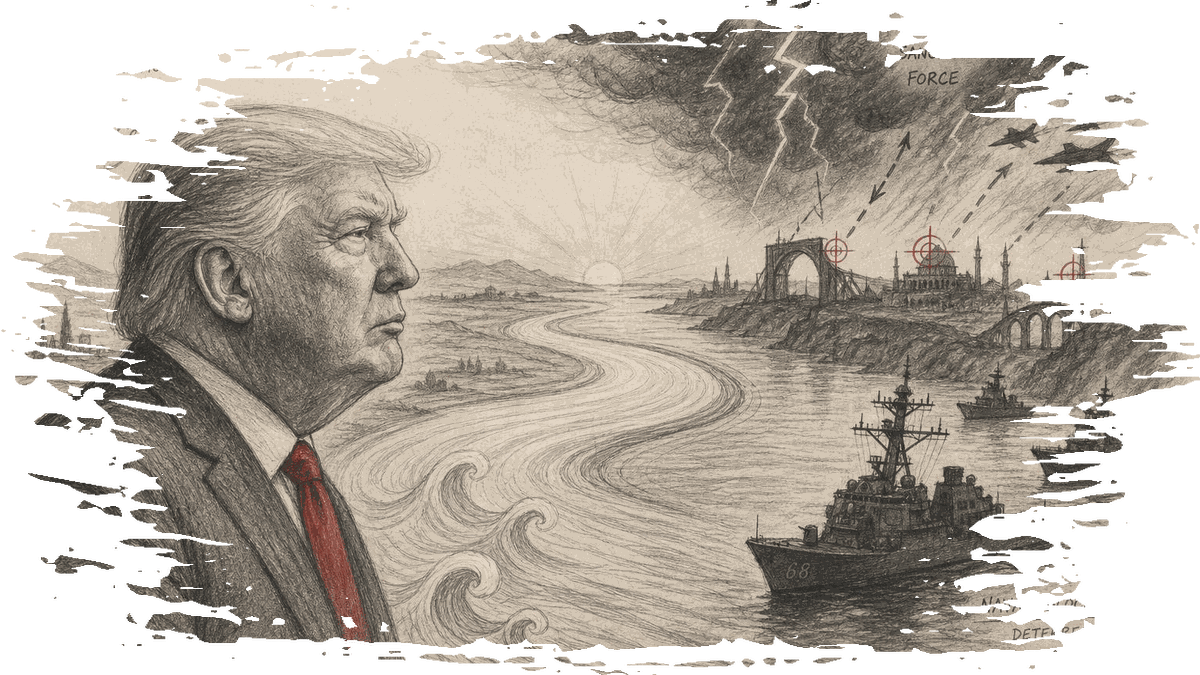
In a series of statements over the past two days, President Donald Trump has conveyed a complex and seemingly contradictory stance on the ongoing conflict with Iran. On one hand, Trump has suggested that the war is “winding down” and that there is positive momentum towards reaching a deal with Iran. On the other hand, he has maintained that U.S. military forces are “locked and loaded” and ready to strike if necessary, underscoring the readiness to target 38 bridges in Iran if a strong agreement is not reached.
These remarks came after a meeting with Qatar’s prime minister, during which Trump expressed optimism about the potential for ending the conflict. He noted that Iran is engaging in negotiations “very politely” and that there is a “good chance” of a deal, suggesting that the war could be “ending quickly.” This tone of de-escalation appears to be in response to domestic pressures, as Trump acknowledged that voters are unhappy with the war, particularly due to its impact on gas prices, which has contributed to public dissatisfaction.
Despite these indications of a potential diplomatic resolution, Trump’s statements also reflect a preparedness for military action. He emphasized that the U.S. military is ready to act if Iran does not agree to a “very strong agreement.” This dual messaging seems to serve multiple audiences: American voters, Iranian negotiators, Gulf allies, and Israeli Prime Minister Benjamin Netanyahu, who has reportedly been urging Trump to maintain a hardline stance against Iran.
The mixed messages from Trump highlight the complexity of U.S. foreign policy in the region. While he projects a willingness to negotiate, the continued military readiness and naval blockade suggest that the situation remains tense. The blockade, part of Task Force Iron Gate, aims to restrict Iranian weapons shipments and maintain pressure on Tehran.
Trump’s approach appears to be influenced by recent political developments, including the U.S. midterm elections where Republicans faced significant losses. The election results have prompted Trump to reassess his strategies, particularly as public opinion has turned against the war. This reassessment is reflected in his acknowledgment that the war may not be a “good decision” for the present, despite being historically justified.
The president’s comments have sparked discussions about the future of U.S.-Iran relations and the broader geopolitical implications. As Trump navigates these challenges, the international community remains watchful of the potential shifts in U.S. policy and their impact on regional stability. The ongoing negotiations and military posturing underscore the delicate balance between seeking peace and preparing for conflict, with significant consequences for U.S. foreign relations and domestic politics.

0 Comments