

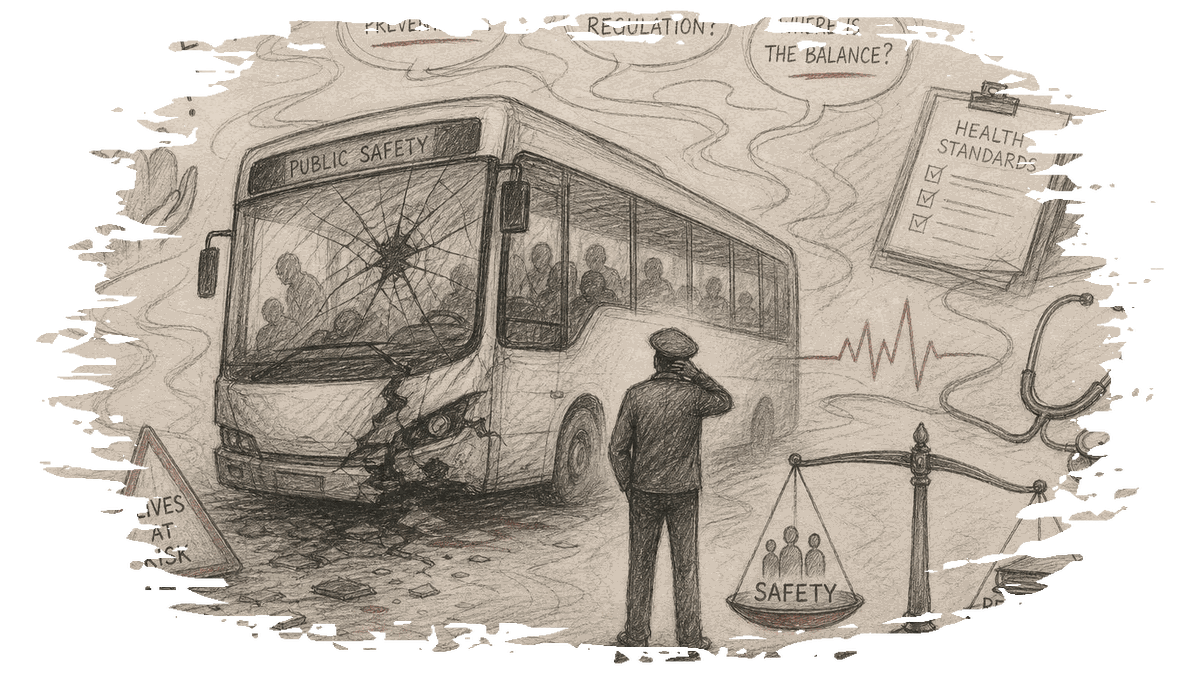
A recent bus accident in Croatia involving a Serbian driver has sparked a renewed debate over the adequacy of health regulations for professional drivers in Serbia. The incident, which occurred on November 8, 2026, on the A3 highway near Ivanić-Grad, resulted in the deaths of two passengers and injuries to 30 others. The driver, a 55-year-old Serbian citizen identified as D.V., has been placed in one-month detention as investigations continue into the cause of the accident.
The driver claims that a sudden health issue related to diabetes caused him to lose control of the vehicle. This assertion has brought attention to the protocols in place for monitoring the health of professional drivers in Serbia. Professor Milan Vujanić, a retired expert from the Faculty of Transport in Belgrade, emphasized the rigorous criteria required for obtaining a D category license, which allows individuals to drive buses. He explained that the process involves a progression through various driving categories, starting from B to C, and finally to D, with strict health and experience requirements at each stage.
In Serbia, professional drivers are subject to regular health checks, unlike those with a B category license who are not required to undergo medical examinations as long as their license is valid. Drivers transporting children, for instance, must possess a medical certificate issued within the last six months, and their vehicles must pass a technical inspection no more than a month before the trip. Vujanić highlighted that if a doctor identifies a health issue during a medical examination that could impact driving safety, they are legally obligated to report it to the Ministry of Internal Affairs.
The accident has prompted discussions about the legal responsibilities of drivers and transport companies in ensuring passenger safety. Experts are examining whether the current health checks are sufficient, especially for conditions like diabetes, which can have sudden and severe implications. In some Western countries, such as Germany, drivers over the age of 65 are prohibited from transporting passengers in buses, although this age restriction does not apply to the Serbian driver involved in the accident, as he is 55.
The investigation is also focusing on the driver’s health history and whether the claimed diabetic episode could indeed have caused the sudden loss of control. Vujanić noted that the outcome of the investigation and medical findings will be crucial in determining legal responsibility. If it is proven that the accident was due to an unforeseeable medical emergency, the driver may not be held criminally liable.
This incident has reignited concerns about road safety in Serbia, where previous discussions have highlighted systemic issues, including high traffic fatality rates and inadequate enforcement of health regulations for drivers. The case underscores the importance of stringent health monitoring for professional drivers to prevent similar tragedies in the future. As the investigation progresses, it remains to be seen how these discussions will influence policy changes regarding driver health regulations in Serbia.



0 Comments