

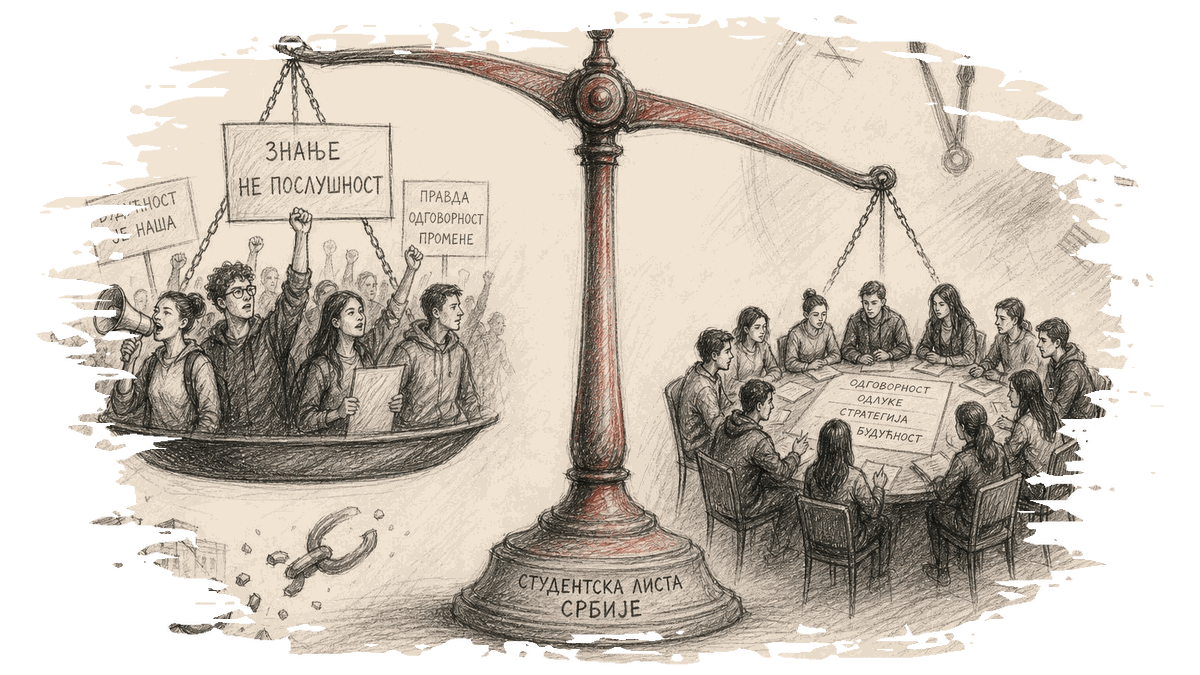
Tensions are emerging within Serbia’s Students’ List as candidates express differing views on the decision-making processes in the new government. Dejan Šoškić, a prominent figure within the Students’ List, has acknowledged that there are candidates who wish to adhere strictly to the directives of the student movement, while others argue for more rapid decision-making. This internal debate highlights the challenges the movement faces as it transitions from a protest-based organization to a governing body following its victory in the October 2026 parliamentary elections.
The Students’ List, which secured a majority in the recent elections, has committed to a governance model that emphasizes student involvement in political processes. However, the practical application of this model remains unclear. Analysts suggest that the new government will need to balance autonomy with student oversight, a novel approach in Serbian politics. According to political analyst Ognjen Gogić, the decision-making process within the student movement is more thorough than traditional party structures, which could lead to tensions between immediate and mediated forms of democracy.
Candidates from the Students’ List have signed a responsibility agreement with the student movement, indicating a commitment to collaborative governance. This agreement suggests that any breach would be considered a resignation, underscoring the movement’s emphasis on accountability. Despite this, questions remain about how decisions will be made within the executive and legislative branches, particularly given the constitutional autonomy of elected representatives.
The formation of the new government is expected to bring about a unique decision-making model. While the prime minister and ministers will have constitutional freedom in decision-making, they must adhere to the Students’ List’s program. Šoškić emphasized that while communication with students is ongoing, the representatives are the legal holders of their mandates and will operate autonomously within the framework of the constitution and law.
The Students’ List’s victory marked a significant shift in Serbian politics, ending the 14-year rule of the Serbian Progressive Party. This change has brought about a new political landscape, with the Students’ List aiming to address issues such as corruption and media freedom. However, the emerging tensions within the movement could impact the stability and effectiveness of the new government.
As the Students’ List prepares to form a government, the dynamics between elected officials and the student movement will be crucial in implementing its agenda. The movement’s ability to maintain unity and effectively govern will be tested as it navigates the complexities of political leadership while staying true to its grassroots origins. The upcoming presidential elections later this year add another layer of complexity to the political environment, with the Students’ List expected to play a significant role in shaping Serbia’s future governance.

0 Comments